What's the Difference Between Two-Color Injection Molding and Overmolding?
In modern plastic processing, two-color injection molding and overmolding are key technologies for multi-material
forming. Understanding their differences helps optimize production efficiency and reduce costs.
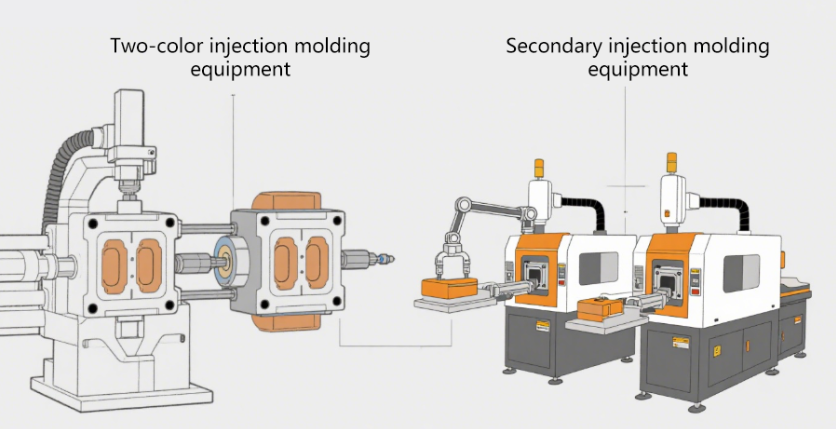
1. Equipment & Molds
Two-Color Injection Molding
Relies on specialized two-color machines with dual barrels and nozzles. A single mold with two cavities uses rotary
mechanisms (turntables or cores) to switch positions between injections, enabling automated continuous production.
Overmolding
Uses two separate molds and can work with standard injection machines. After the first molding, semi-finished parts are
manually or robotically transferred to the second mold, requiring more manual intervention.
2. Process Flow
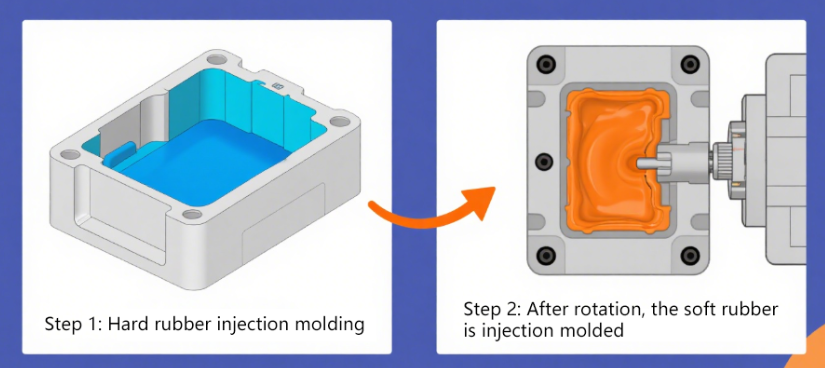
Two-Color Injection Molding
Completes both injections in one machine/mold sequentially. Typically, rigid materials (e.g., PC) form the base first, followed
by flexible materials (e.g., TPE/TPU) for functional layers. Strict material compatibility (melt point, shrinkage) is required due
to rapid consecutive injection.
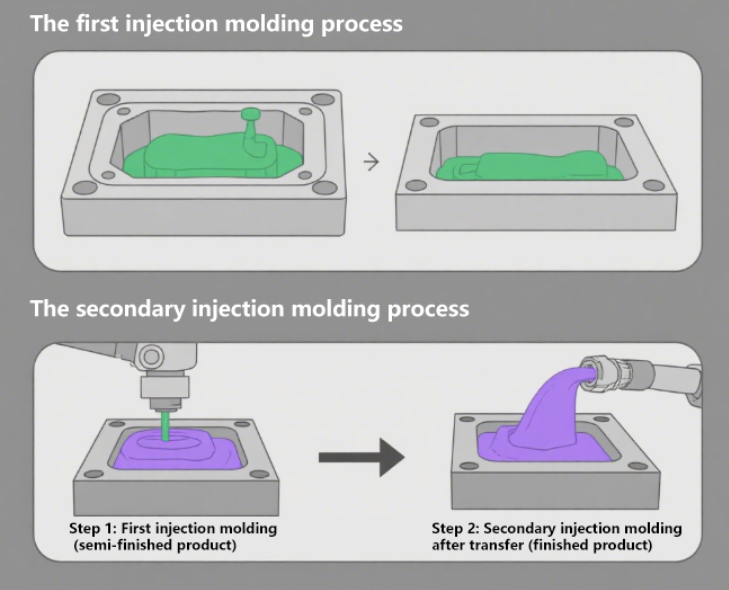
Overmolding
Follows a two-step process: first molding, demolding, then repositioning for the second injection. Supports diverse material
combinations (e.g., metal-plastic, silicone-plastic) but may need surface treatments (e.g., primer coating) to enhance adhesion
for incompatible materials.
3. Applications
Two-Color Injection Molding
Ideal for mass-produced, high-precision products:
Automotive: Dashboard buttons, shift knobs
Electronics: Phone cases, tablet frames
Overmolding
Suitable for small-batch, complex or special combinations:
Medical: Silicone-sealed plastic components
Home goods: Metal-decorated plastic parts
4. Cost & Efficiency
Two-Color Injection Molding
High initial mold costs but excels in mass production with fast cycles, low labor input, and stable quality—reducing unit costs
significantly at scale.
Overmolding
Lower initial mold investment but higher labor costs and slower cycles due to manual transfers. Prone to errors (e.g., misalignment),
increasing defect rates, making it cost-effective only for small batches.
Summary
Two-color molding suits large-scale, high-precision production with its automation and consistency. Overmolding offers flexibility
for small-batch, complex designs. Choosing the right process depends on production volume, material combinations, and cost targets.