The application of two-color injection molding in the medical field
In the rapidly advancing era of medical technology, medical devices are moving toward miniaturization, precision, and
functional integration. Two-color injection molding, an advanced plastic molding process, has emerged as a key technical
support in healthcare, breaking traditional limitations by precisely fusing two materials with distinct properties in a single
molding cycle. This innovation significantly enhances product performance and production efficiency, driving transformative
changes in medical manufacturing.
Ⅰ. Process Principles of Two-Color Injection Molding
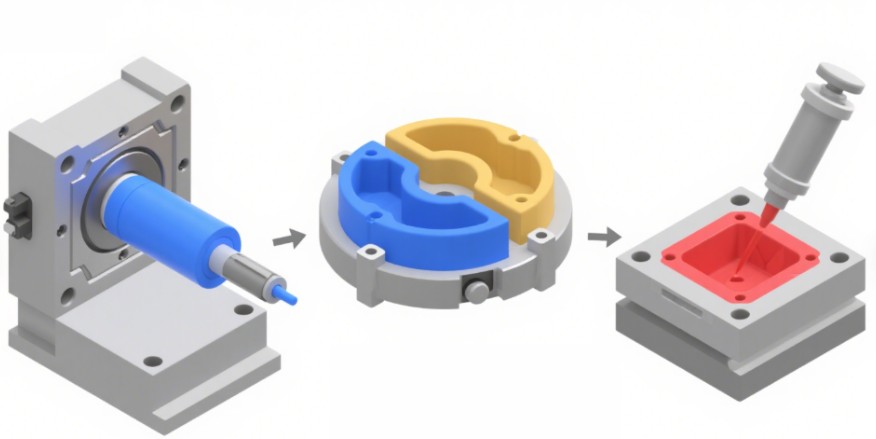
Two-color injection molding utilizes specialized machines with dual barrels to sequentially inject two different plastics into
the same mold cavity within one cycle. Molds typically employ turntable or core-rotating designs: after the first material forms
the base structure, the mold rotates 180° with 0.01mm precision, aligning the semi-finished part for the second injection. This
molten-state bonding achieves molecular-level adhesion. The process demands extreme precision, with temperature control
within ±1℃ and pressure fluctuations under ±2bar to ensure uniform material distribution.
Ⅱ. Unique Advantages in Medical Applications
(1) Superior Functional Integration
Material Complementarity: Minimally invasive catheter connectors combine PEEK (withstanding 134℃ steam sterilization ≥100
cycles) and silicone (liquid leakage ≤0.01ml/min) for durability and seal integrity.
Specialized Functionality: Infusion pump panels use PMMA/PC composites—transparent PMMA ensures touch sensitivity ≤0.1s,
while PC provides impact resistance ≥20kJ/m2.
(2) Reliability Under Strict Hygiene Standards
Reduced Bacterial Risks: One-piece molding eliminates assembly gaps, lowering infection risks. Insulin pen buttons, for example,
avoid contamination from multi-step processes.
Efficient Cleaning: Smooth, seamless surfaces reduce cleaning time by 30% compared to traditional assemblies, facilitating thorough
disinfection.
(3) Production Efficiency and Cost Control
Shorter Cycles: Medical components see ≥42% reduction in production time versus traditional assembly.
Lower Costs: Defect rates drop ≥60% by eliminating assembly errors, reducing material waste and labor expenses.
Ⅲ. Typical Medical Applications
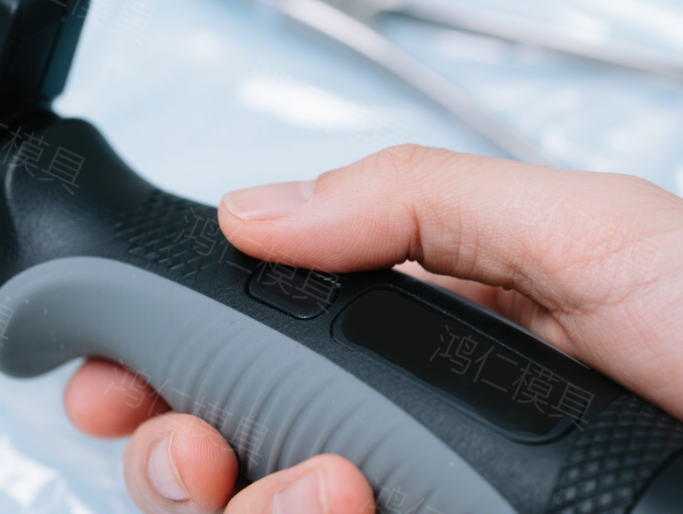
Minimally Invasive Devices: Catheters with soft outer layers and rigid inner cores; surgical instrument handles combining rigid structures
with TPE grips for precision.
Wearable Devices: Fitness monitors use durable outer shells with skin-friendly inner layers, integrated with waterproof display frames.
Consumables: Syringe plungers with rubber-tipped seals and rigid handles; dental trays pairing supportive frameworks with comfort layers.
Ⅳ. Challenges and Future Trends
Challenges: Material compatibility issues (e.g., bonding PEEK and silicone) require specialized compatibilizers. Precision molds cost 3-5x
more than standard versions.
Trends: Smart systems with real-time parameter adjustment via AI and sensors; integration with 3D printing for complex components;
bioresorbable material combinations meeting EU medical standards.
Two-color injection molding continues to revolutionize medical manufacturing, balancing performance, safety, and efficiency. Despite
challenges, ongoing advancements promise broader applications in next-generation healthcare solutions.