Commonly used steel materials for plastic molds of automotive parts
In the fast-developing automotive industry, plastic molds are core equipment for component production, and material selection
directly affects mold life, efficiency, and component quality. With new energy and intelligent connected vehicles emerging,
automotive components are becoming lighter and more integrated, raising higher demands for mold materials. This article
outlines common steel materials for automotive plastic molds, their key properties, and new-era technical trends.
1. Traditional Basic Mold Steels & Applications
Carbon Tool Steel
Entry-level material with carbon content of 0.8%-1.0%, reaching HRC 58-62 after quenching and tempering. It has basic machinability,
suitable for simple components with production volumes less than 10,000 units and low precision requirements. However,
it has poor heat resistance (continuous operating temperature below 200°C) and corrosion resistance, tends to rust in humid
environments, and is prone to deformation after heat treatment.
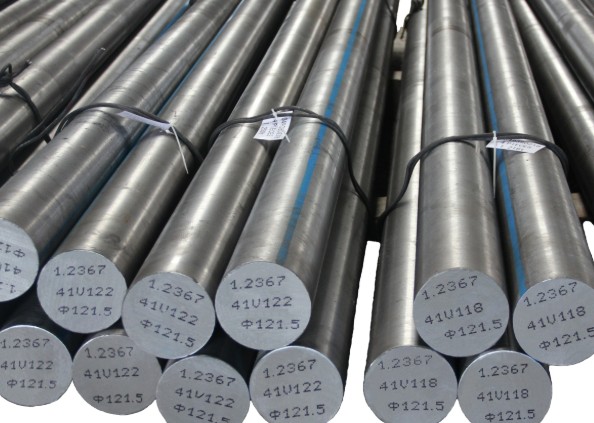
Alloy Tool Steel
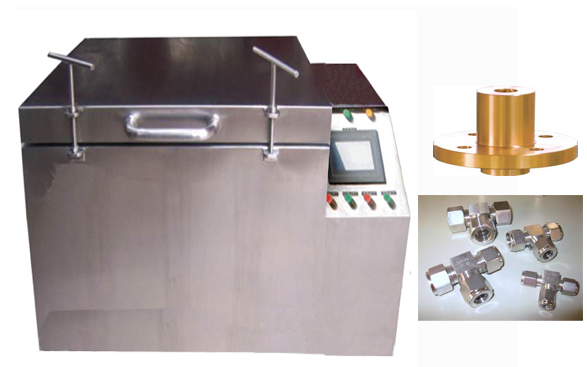
Alloying elements are added to optimize hardenability and wear resistance. After cryogenic treatment, its hardness reaches HRC
60-64, with impact toughness superior to pure carbon tool steel. Mold lifespan can reach 50,000-100,000 units, suitable for
medium-complexity components. It is still widely used in low-precision molds for traditional fuel vehicles.
Pre-hardened Plastic Mold Steel
Pre-hardened before delivery (hardness HRC 30-45), it can be directly processed without subsequent heat treatment, avoiding
deformation. It has excellent polishing performance, capable of achieving a mirror finish with fine surface roughness, ideal for
appearance components. Some variants have precipitation hardening properties, with low performance attenuation after welding
repair and good fatigue resistance, suitable for high-precision components.
2. High-Performance Mold Steels & Applications
Age-Hardening Mold Steel
Representing high-end mold materials, it reaches HRC 40-45 after aging treatment. Its fracture toughness is over 50% higher than
traditional alloy tool steel, with excellent thermal stability (continuous operating temperature up to 300°C). Suitable for large and
complex molds, it has a mold lifespan of 500,000-1,000,000 units and good dimensional stability, ensuring component consistency
after long-term molding.
Corrosion-Resistant Mold Steel
With high chromium content (13%-17%), it forms a dense protective film, providing strong corrosion resistance against plastic melts
with fillers. After electrolytic polishing, it has ultra-fine surface roughness, reducing plastic melt flow resistance and shortening
molding cycles by 10%-15%. It also has outstanding high-temperature resistance (continuous operating temperature above 350°C),
suitable for high-temperature components and mass production of new energy vehicle parts.
Powder Metallurgy High-Speed Steel
Produced via powder metallurgy with uniform internal composition, its hardness can reach HRC 65-68, and wear resistance is 5-8
times that of ordinary alloy tool steel. It has high compressive strength, resisting wear from ultra-hard fillers, with mold lifespan
exceeding 1,000,000 units. Suitable for lightweight structural components of new energy vehicles, it also has good red hardness
with low surface hardness attenuation during high-temperature molding.
3. New Requirements for Mold Steels in the New Era
Lightweight & High Strength
New energy vehicles drive demand for lightweight, high-strength molds. Compared with heavy traditional steel molds, new aluminum
alloy molds are 40%-50% lighter while maintaining sufficient rigidity, reducing power consumption by tens of thousands of kWh
annually per mold. Their good thermal conductivity also accelerates cooling and improves production efficiency.
High Precision & Long Lifespan
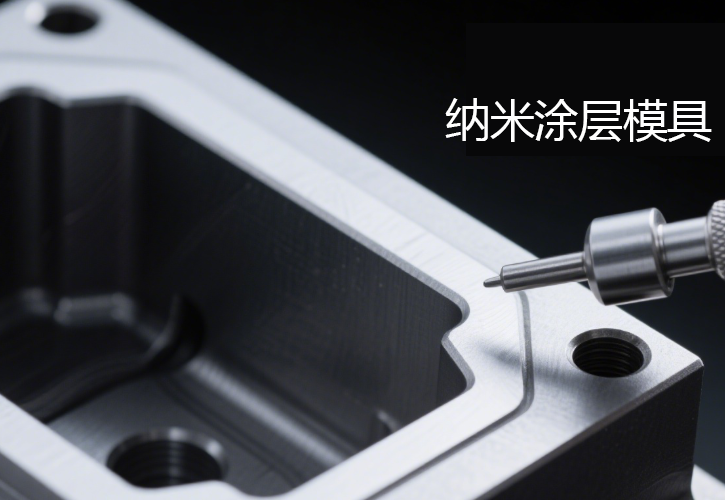
Intelligent connected vehicles require molds for components with dimensional tolerances within ±0.01 mm. Composite solutions
with nano-coatings achieve surface hardness over HV 2000 and friction coefficient below 0.1. After 500,000 continuous molding cycles,
cavity deviation remains less than 0.005 mm, with defect rate below 0.3%, and coatings have strong adhesion.
Environmental Friendliness & Recyclability
Sustainable development promotes recyclable mold materials. Mature recycling technology for hot-work mold steel enables over 95%
recovery rate via vacuum refining, with recycled steel having mechanical properties comparable to virgin steel. Using recycled steel
reduces raw material waste and improves cutting chip recovery, lowering resource consumption.
4. Material Selection Principles & Future Trends
Material selection follows "performance matching and scenario adaptation": choose pre-hardened steel for small-batch simple parts,
wear-resistant steel for medium-batch medium-precision parts, and high-wear-resistance powder metallurgy steel for large-batch
parts with special fillers. Determine surface treatments based on plastic properties and molding processes.
Future mold steels will develop toward multi-functional composites—e.g., embedding nano-ceramic particles to balance high
hardness and toughness. 3D printing will also break traditional limits, enabling molds with complex cooling structures to shorten
cycles by over 30%. As the automotive industry advances, mold steels will shift from "basic use" to "high performance," supporting
high-quality development.