Key Points and Advantages of Custom Plastic Products
According to the 2024 industry report of the China Plastics Processing Industry Association, the proportion of customized
plastic products in the overall plastic output value has increased from 18% in 2019 to 29%, with a compound annual growth
rate of 10.3%. This growth is mainly due to the rigid demand for functional and differentiated products in industries such
as automotive, medical, and electronics, and customized plastic products have become a core link in the optimization of the
manufacturing supply chain.
1. Core Points of Custom Plastic Products
1.1 Definition of Requirements and Parameter Quantification
Core performance indicators need to be locked according to industry characteristics: customized medical implant parts must
comply with GB/T 16886 "Biological Evaluation of Medical Devices", and the cytotoxicity grade is ≤ 1; parts around automobile
engines need to meet the deformation ≤ 0.3% under the temperature cycle of -40℃ ~ 120℃. In terms of assembly compatibility,
according to GB/T 1800.1-2020, precision transmission parts adopt IT5 - IT7 tolerance, and ordinary structural parts adopt
IT8 - IT10 tolerance.
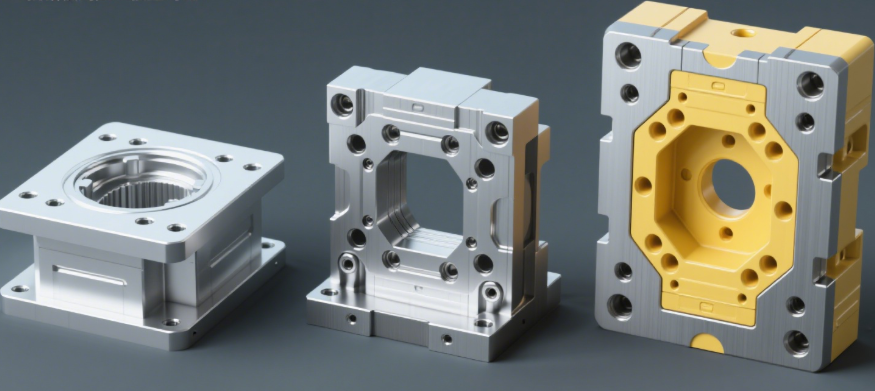
Different production batches need to match the corresponding mold types to balance cost and efficiency:
Small batch (100 - 500 pieces): resin 3D printing mold is selected, the mold cost is 0.5 - 20,000 yuan, and the production cycle is
3 - 5 days / 10,000 pieces.
Medium batch (500 - 5,000 pieces): aluminum alloy mold is used, the mold cost is 20,000 - 80,000 yuan, and the production cycle
is 1 - 2 days / 10,000 pieces.
Large batch (more than 5,000 pieces): P20 steel mold is used, the mold cost is 80,000 - 500,000 yuan, and the production cycle is
0.3 - 0.8 days / 10,000 pieces.
1.2 Technical Specifications for Material Selection
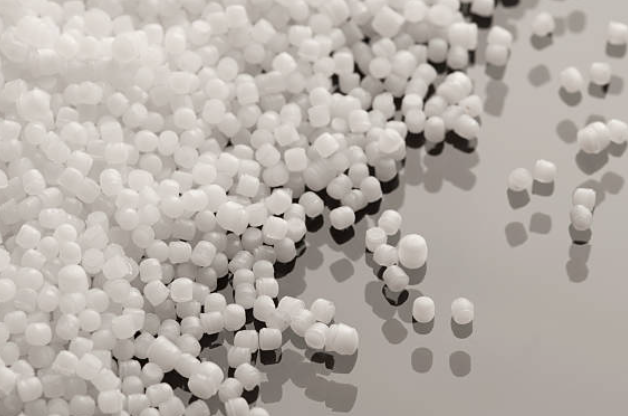
Material Density (g/cm3) Tensile Strength (MPa) Heat Deflection Temperature (℃) Typical Applications
HDPE 0.94 - 0.96 28 - 35 70 - 80 Chemical storage tanks, bottle caps
PP 0.90 - 0.91 30 - 40 100 - 120 Automobile bumpers, home appliance casings
ABS 1.02 - 1.05 40 - 50 90 - 110 Laptop casings
PC 1.20 - 1.22 60 - 70 130 - 140 Optical lenses, baby bottles
PEEK 1.30 - 1.32 90 - 100 340 - 350 Aviation engine components
Food - contact products must comply with GB 4806.7 - 2016, and the total migration of heavy metals is ≤ 10mg/kg; electronic and
electrical products must meet the RoHS 2.0 directive, restricting the use of 6 harmful substances such as lead and mercury.
1.3 Key Technologies for Mold Development
1.3.1 Structural Optimization Design
Cooling System: The conformal waterway design is adopted to control the temperature fluctuation of the mold cavity within ±2℃,
which shortens the molding cycle by more than 30% compared with the traditional straight waterway.
Exhaust System: The depth of the exhaust groove is 0.01 - 0.03mm and the width is 5 - 10mm, ensuring that the gas discharge rate in
the cavity is ≥ 99% and avoiding bubble defects.
1.3.2 Processing Precision Control
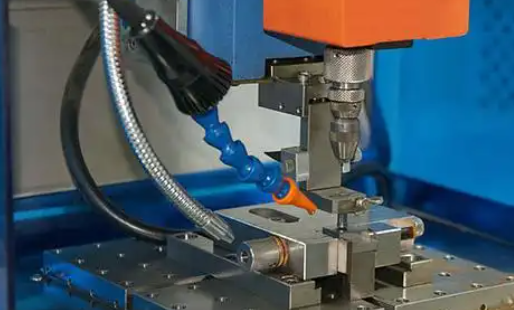
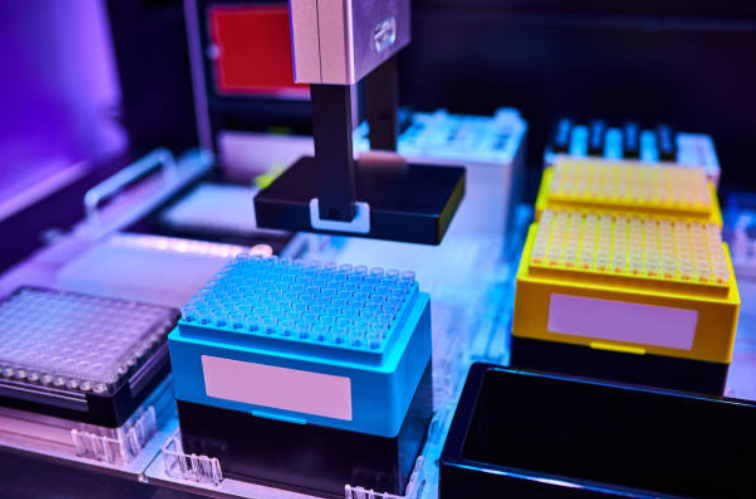
Five - axis linkage machining centers (positioning accuracy ≤ 0.005mm) are used to process the mold cavity, and the surface
roughness of EDM is Ra ≤ 0.4μm to ensure the product size and surface quality.
1.4 Control of Molding Process Parameters
Taking injection molding as an example, the control standards of core process parameters are as follows:
Process Parameter PP Material PC Material Control Precision
Barrel Temperature (℃) 180 - 220 260 - 300 ±5℃
Injection Pressure (MPa) 60 - 90 80 - 120 ±2MPa
Holding Pressure (MPa) 40 - 60 50 - 80 ±1MPa
Cooling Time (s) 15 - 30 25 - 45 ±1s
1.5 Quality Inspection and Traceability
1.5.1 Whole - process Inspection System
Raw Material Inspection: Test the melt flow index according to GB/T 3682.1 - 2018 and control the ash content ≤ 0.5%.
Process Inspection: Sample and inspect the size with a coordinate measuring machine (accuracy ≤ 0.001mm) every 2 hours.
Finished Product Inspection: Test the mechanical properties according to GB/T 1040.1 - 2018 and GB/T 1043.1 - 2008, and the color
difference ΔE ≤ 3 after 500h of UV aging.
1.5.2 Whole - chain Traceability Management
Record the raw material batch number, mold number, process parameters and inspection data through the MES system to realize
the whole - process traceability from order to delivery.
2. Technical Advantages of Custom Plastic Products
2.1 Function Integration, Cost Reduction and Efficiency Increase
Through integrated molding design, multi - part assembly can be replaced. An automobile parts enterprise replaced 3 metal parts
with customized ABS integrated parts, realizing a 40% reduction in weight, a 60% reduction in assembly processes, and a 25%
reduction in unit cost.
2.2 Quick Response to Market Demand
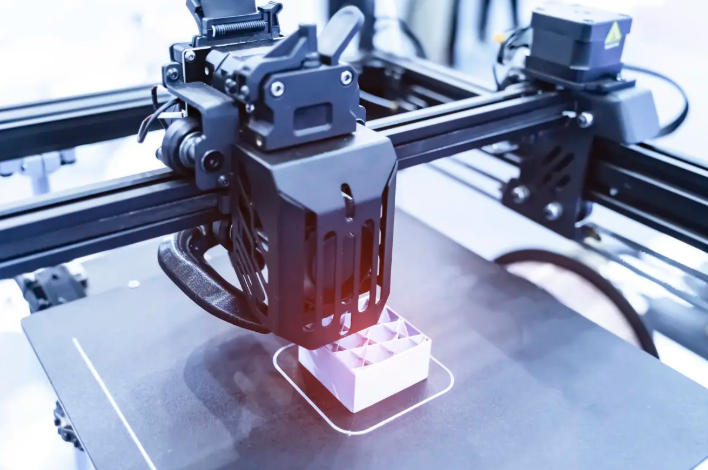
With the help of 3D printing rapid prototyping technology, the development cycle of new products is shortened from 45 - 60 days
of traditional molds to 7 - 10 days, and the small - batch trial production cycle is compressed by more than 80% to meet the demand
for rapid iteration.
2.3 Optimize Cost Structure
The on - demand production mode greatly improves the inventory turnover rate (≥ 50%). Through customized production, an
electronic parts manufacturer reduced the inventory capital occupation from 8 million yuan to 3 million yuan, saving about 400,000
yuan in financial costs annually.
2.4 Improve Environmental Performance
Customized products using biodegradable materials such as PBAT/PLA can be completely degraded in the natural environment within
6 - 12 months, reducing more than 90% of plastic pollution compared with traditional PE materials.
3. Conclusion
Custom plastic products need to focus on five core links: demand quantification, material matching, mold development, process
control and quality inspection, and achieve the optimal balance between function and cost by accurately controlling technical
parameters. With the popularization of CAD/CAE digital design and Industry 4.0 intelligent equipment, customized production will
develop in the direction of higher precision (dimensional tolerance ≤ 0.005mm) and shorter cycle (24 - hour fast delivery), providing
key support for high - end manufacturing.