Comprehensive Introduction to Injection Mold Structure and Process
Injection molds, as core equipment for plastic molding, serve as the key link connecting raw materials and finished
products. With breakthroughs in intelligent and green technologies, their structural design and process systems are
undergoing full-chain reconstruction. This article systematically analyzes the structural composition, process principles,
and technological evolution of injection molds, integrating the latest industry practices and technical literature.
I. Core Structural System of Injection Molds
An injection mold achieves plastic molding through multi-system collaboration, with its core structure divided into four
modules: molding components, fluid control, action execution, and intelligent assistance, each with clear functions and
close linkage.
(1) Core Molding Components
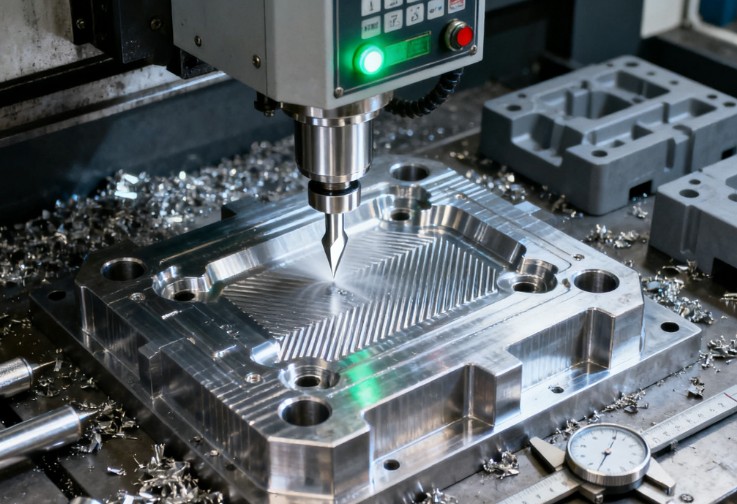
Molding components directly determine the shape and precision of products, including three key elements: cavity, core,
and parting surface. The cavity shapes the external contour of the product, while the core forms the internal structure; the
matching precision between them must be controlled within 0.005-0.01mm. The parting surface, as the contact surface
between the moving and fixed molds, its sealing performance directly affects the flash defect rate of products, and a labyrinth
seal design is usually adopted to improve reliability. Molding components of high-value-added molds mostly use high thermal
conductivity alloy materials, increasing the mold life from the traditional 500,000 cycles to over 2 million cycles.
(2) Fluid Transmission and Temperature Control System
The gating system undertakes the function of raw material transportation, consisting of the sprue, runner, and gate.
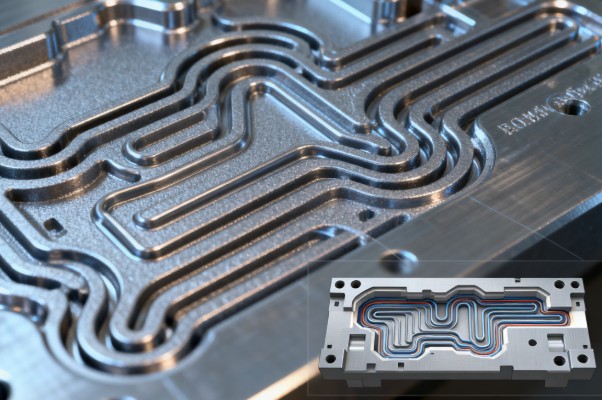
Optimizing the runner design with AI algorithms can reduce material waste by 15%-20%. The temperature regulation system
controls the mold temperature through cooling channels; German enterprises use 3D-printed conformal cooling molds,
shortening the injection cycle by 30% and reducing energy consumption by 25%. The application of new nano-coatings further
improves the uniformity of temperature control and reduces product warpage defects.
(3) Action and Safety Mechanisms
The guiding mechanism, composed of guide pillars and bushings, ensures the clamping positioning accuracy with a repeat
positioning error of no more than 0.002mm. The ejection mechanism adopts a combined design of ejector pins and ejector
sleeves, and can be equipped with an air ejection device for thin-walled products to avoid demolding damage. The core-pulling
mechanism is used to form side holes and undercuts, and achieves precise pulling with hydraulic drive. The safety locking
device and exhaust system form a double guarantee; the exhaust groove width is usually set to 0.01-0.03mm, which can effectively
discharge gas in the cavity and reduce the bubble defect rate.
(4) Intelligent Auxiliary Modules
Modern molds generally integrate sensors and monitoring systems to collect temperature and pressure data in real time, with
a data sampling frequency of up to 100Hz. By linking with injection molding machines, dynamic adjustment of process
parameters is realized; a leading enterprise reduced the product defect rate from 3% to 0.5% using this technology. Some
high-end molds are also equipped with RFID chips to achieve full-life-cycle traceability management.
II. Full Process and Key Parameters of Injection Molding
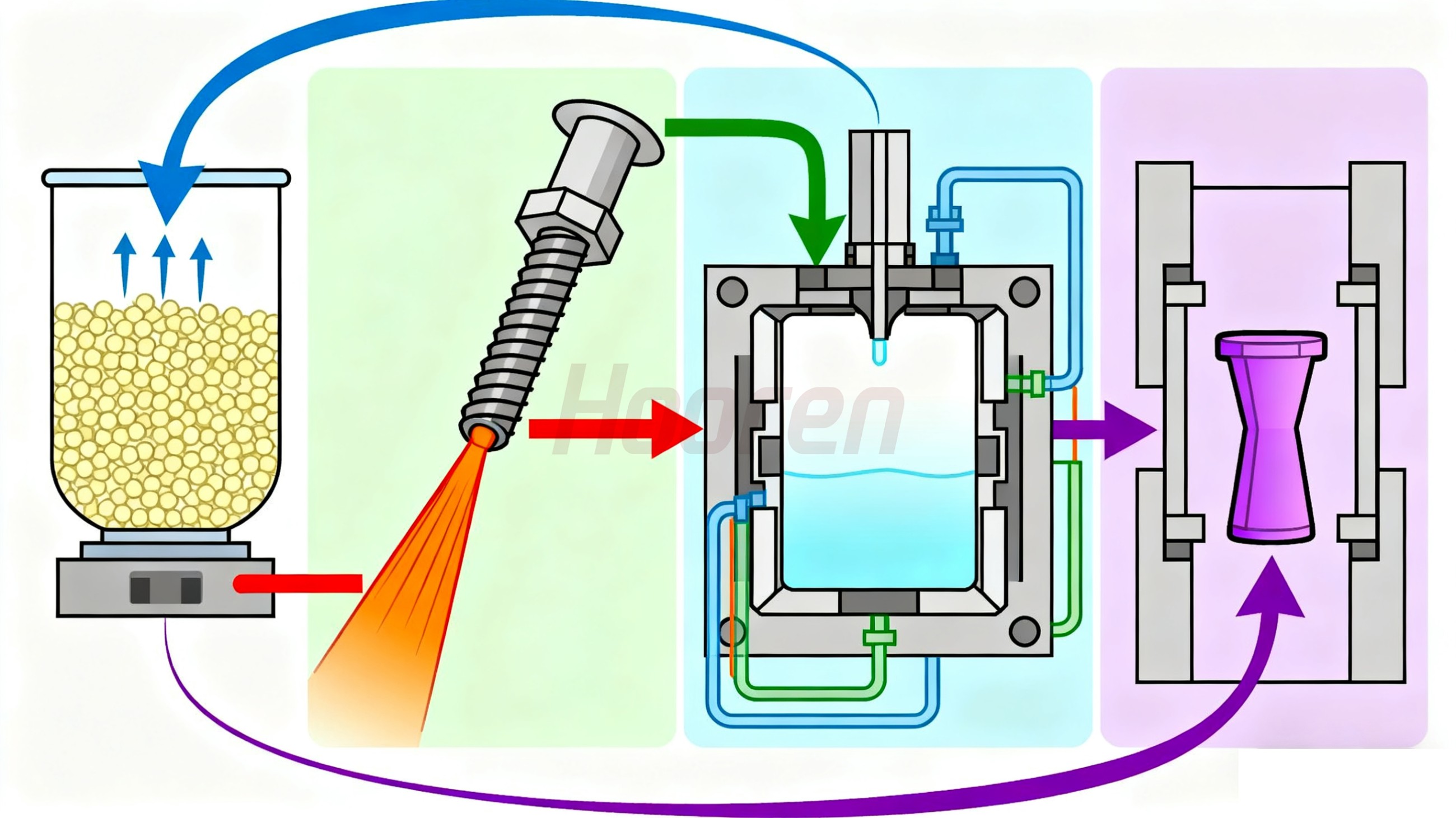
The injection molding process follows the basic flow of "raw material pretreatment - injection molding - post-demolding
treatment", and parameter control in each link directly affects product quality.
(1) Process Preparation Stage
Plastic pellets need to be dried, with moisture content controlled below 0.02%-0.05%. The drying temperature is set according
to material properties, e.g., 80-100℃ for PA66. The mold must be preheated before installation to ensure the initial temperature
deviation does not exceed ±5℃, and the rationality of molding parameters is verified through test molding.
(2) Core Molding Process
Injection molding includes three key stages: filling, packing, and cooling. The filling speed must match material fluidity, usually
set at 30-150mm/s, and a segmented speed regulation method is used to reduce jetting defects. The packing pressure is generally
60%-80% of the injection pressure, and the packing time is adjusted according to product wall thickness—about 20-30s for
products with a 10mm wall thickness. Cooling time accounts for 50%-70% of the molding cycle, which can be precisely controlled
by an intelligent temperature control system.
(3) Post-treatment and Quality Control
Demolded products need to have gates and flashes removed, and some materials require annealing to eliminate internal stress.
Quality inspection combines visual inspection and mechanical testing; an enterprise built a quality model using the random
forest algorithm, with a prediction accuracy RMSE of 0.014, which can effectively identify potential defects. For degradable
plastic products, special indicators such as biocompatibility also need to be tested.
III. Technological Development Trends and Practical Cases
The current injection mold industry shows the characteristics of intelligence and greenization. Digital design shortens the mold
cycle by over 40%, and metal 3D printing technology enables integrated molding of complex structures. Japanese enterprises
have developed mold remanufacturing technology, repairing old molds through laser cladding, with costs only 30% of new
molds and carbon emissions reduced by 60%. In the automotive field, Tesla's integrated die-casting technology has driven
mold enterprises to participate in vehicle design 3 years in advance, increasing R&D investment ratio to 15%.
The collaborative optimization of molds and processes has become the core of technological upgrading. Through the full-chain
reconstruction of "design - material - process", multiple breakthroughs in precision, efficiency, and environmental protection
are achieved, providing key support for the high-quality development of the manufacturing industry.