Technical document

    Rubber performance testing molds, rubber sample preparation molds, rubber inspection dedicated molds, Hooren mold

    2025-10-09 11:57:24 Rubber testing molds
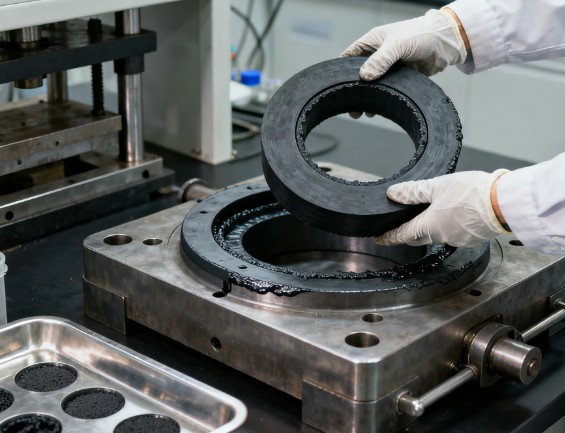
    Special molds for rubber testing are core to accurate rubber performance testing. Dumbbell-shaped, ring-shaped, and flat-plate molds (key components) support sample preparation/testing for different forms. Together with rubber performance testing, sample preparation, and special testing molds, they form a "preparation-testing-verification" chain, directly ensuring sample consistency and data reliability.

    I. Core Material Technology

    1. Mold Base Materials
    • Common Requirements: Thermal resistance ≥ 300℃, hardness ≥ HRC 50, wear resistance ≥ 500 HV, corrosion resistance to vulcanizing/release agents.

    • Differentiated Selection:

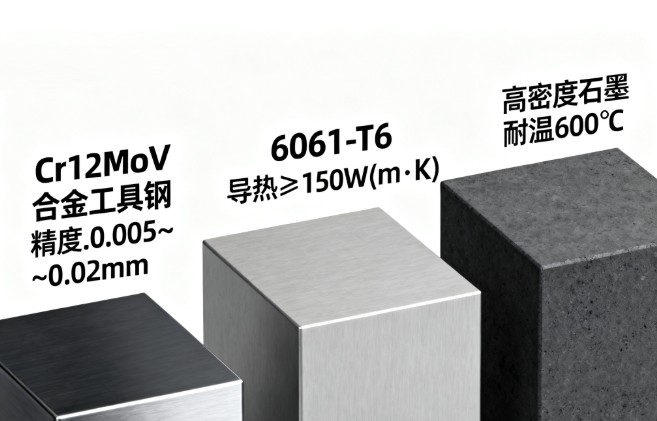
      • Alloy Tool Steel (Cr12MoV): For dumbbell-shaped molds (precision 0.005–0.02 mm, ensures uniform sample stress areas).

      • Aluminum Alloy (6061-T6): For flat-plate molds (thermal conductivity ≥ 150 W/(m·K), uniform vulcanization temperature).

      • High-Density Graphite: For ring-shaped molds (heat resistance up to 600℃, no rubber adhesion).

        injection mould

    2. Elastic Contact Materials

    • Requirements: No adhesion to rubber, deformation rate ≤ 3% after reuse.

    • Applications:

      • Silicone Rubber (60±5 Shore A): Flat-plate mold release layer (140–180℃ vulcanization resistance, easy peeling).

      • Polyurethane Elastomer (tensile strength ≥ 20 MPa): Ring-shaped mold sealing layer (3x wear resistance of natural rubber).

    II. Mold Design & Manufacturing

    1. Core Mold Classification & Structure

    Mold CategorySubtypeKey ParametersTesting ScenariosStandard
    Performance TestingDumbbell-shapedType 1: 115mm total length, 33.0±2.0mm narrow sectionTensile strength/elongation at breakGB/T 528
    Special TestingRing-shapedType A: 44.6±0.2mm ID, 6.0±0.1mm widthCompressive stress/sealing performanceGB/T 528
    Sample PreparationFlat-plate300×300×(1.0–10.0)mm, flatness ≤0.03mm/mShear performance/aging sample prepGB/T 7757

    2. Manufacturing Precision

    • Dimensional Tolerance: Dumbbell edge ±0.005mm, ring ID ±0.01mm, flat-plate thickness ±0.02mm.

    • Surface Quality: Performance molds Ra ≤ 0.8μm, prep molds Ra ≤ 1.6μm.

    • Fit Precision: Ring mold H6/k5 fit (≤0.01mm gap); flat-plate mold parting parallelism ≤0.02mm.

    • injection mould

    III. Sample Preparation Specifications

    1. Preprocessing

    • Rubber Conditioning: Store at 23±2℃ (50±10% RH) for 2–24h; pre-roll flat-plate rubber to ±0.05mm.

    • Mold Cleaning: Wipe with anhydrous ethanol to remove residue.

    2. Molding Parameters


    Core Mold TypeProcess StepKey ParametersPrecautions
    Rubber Sample Preparation MoldPreheating of Flat-plate MoldTemperature: 60~80℃, Holding Time: 15~20minFor flat samples with thickness > 5mm, extend holding time by 5~10min
    Special Rubber Testing MoldVulcanization of Ring-shaped MoldPressure: 15~20MPa, Temperature: 150~170℃, Time: 10~15minAdopt stepwise pressurization to avoid air bubbles in ring-shaped samples
    Rubber Performance Testing MoldCutting of Dumbbell-shaped MoldCutting Speed: 5~10mm/s, Pressure: 0.5~1MPaCheck for residual rubber on the cutting edge after cutting and clean in time


     3. Post-processing

    • Trimming: Remove dumbbell burrs (≤0.1mm); cut flat-plates to specs (e.g., 100×25mm).

    • Storage: Test samples within 16h–4 weeks; seal untested samples (max 3-month storage).

    • injection mould

    IV. Technology Trends

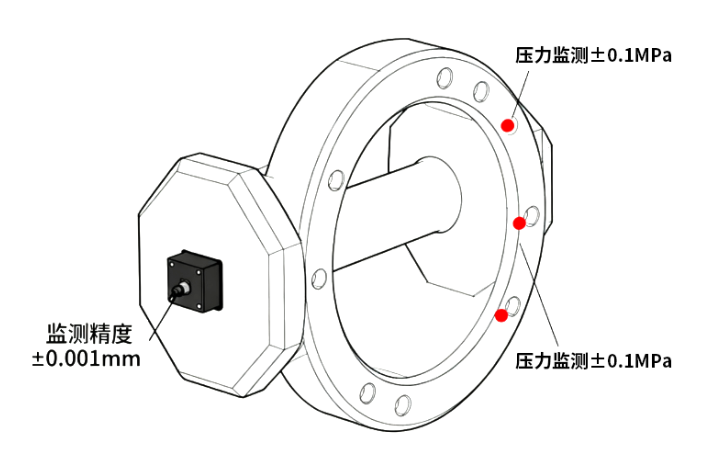
    1. Intelligent Upgrading: Dumbbell molds with laser wear monitoring (±0.001mm); ring molds with pressure sensors (±0.1MPa).

    2. Green Manufacturing: Recyclable aluminum flat-plate molds (≥90% recovery); biodegradable silicone; 30% energy savings via waste heat reuse.

    3. Rapid Response: Modular dumbbell edges (5min replacement); 3D-printed ring cavities (1/3 production time).

    injection mould

    Home
    Product
    News
    Contact