In high-end manufacturing like automotive, medical equipment, and smart home appliances, customization of two-color, thin-wall, and hot runner plastic molds is crucial for product multifunctionalization, lightweighting, and efficient production. These molds must meet complex structural requirements while balancing efficiency and consistency, directly impacting end-product competitiveness. This article outlines key customization techniques, application norms, and trends for practical production reference.
Technical Principle & Application ScenariosTwo-color plastic mold customization achieves integrated molding of two materials (e.g., PC/ABS, PP/TPU) or colors via coordinated dual cavity/core structures on a two-color injection machine. It reduces assembly steps, enhances structural strength and appearance, boosting production efficiency by 15%-20% and material utilization to over 95% vs. traditional single-color molds. Widely used in automotive interior/exterior parts, electronic casings, and medical devices.
Core Design Points
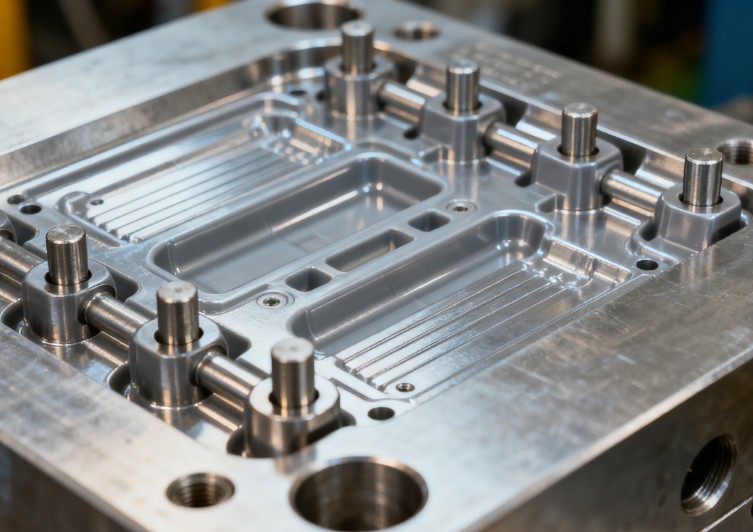
Cavity Structure: Rotary/translational layout with ±0.01mm positioning accuracy; 0.015-0.02mm exhaust channels (industry standard) to prevent air traps.
Gating System: Independent gates for each material; 4-8mm main runner diameter; circular branch runners to reduce flow resistance.
Temperature Control: Zone heating with ≤20℃ cavity temperature difference; ±3℃ surface temperature uniformity for consistent shrinkage.
Process Optimization & Defect Control
Parameter Adjustment: Injection pressure 80-120MPa; first-color speed 30-60mm/s, second-color 40-80mm/s; holding pressure 60%-80% of injection pressure.
Defect Solutions: Control melt flow index difference ≤3g/10min to avoid delamination; use anti-migration steel (e.g., S136) with Ra≤0.02μm cavity polish for color stability.
Technical Trends
Diversification of biodegradable material combinations; integration of AI-powered condition monitoring systems to adjust parameters in real time, improving qualification rates.
Technical Features & Application ScenariosFocuses on 0.5-2.0mm wall-thickness parts, offering 30%-40% material savings and 25%-35% shorter cycles. Widely used in packaging, electronic casings, and automotive lightweight components. Key challenges: melt filling, uneven cooling, and deformation.
Core Technical Requirements
Cavity/Core: Ra≤0.01μm polished cavity; H13 steel core (HRC52-58) for high-pressure resistance; 0.3-0.5mm fillets to avoid cracking.
Gating System: Hot runner/submarine gates (0.8-1.2mm diameter); large-section runners to reduce pressure loss.
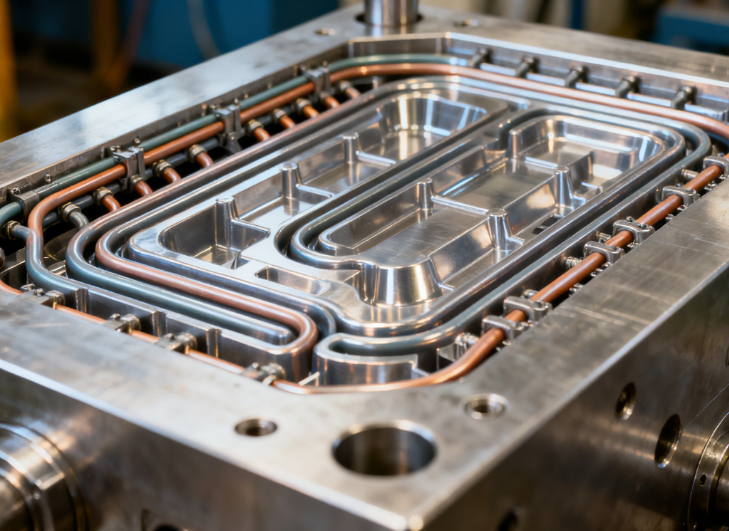
Cooling System: Conformal water channels (8-12mm from cavity, 8-10mm diameter); cooling time accounts for 60%-70% of cycle.
Process Control Points
Injection Parameters: High-pressure/high-speed (120-180MPa, 80-150mm/s); melt temperature 200-230℃ (PP) or 260-290℃ (PC).
Holding & Cooling: Holding pressure 50%-70% of injection pressure; 20-30℃ cooling water with closed-loop control.
Technical Trends
Development of ultra-thin wall (≤0.5mm) molds; integration of micro-nano molding; ceramic-coated steel for 500,000+ cycle life.
Technical Principle & Core AdvantagesHeated gating systems maintain molten material, eliminating sprue waste (material utilization ≥98%) and shortening cycles by 20%-30%. Enables multi-cavity synchronous molding with ±1% weight deviation, suitable for mass-produced plastic parts.
Core Design Specifications
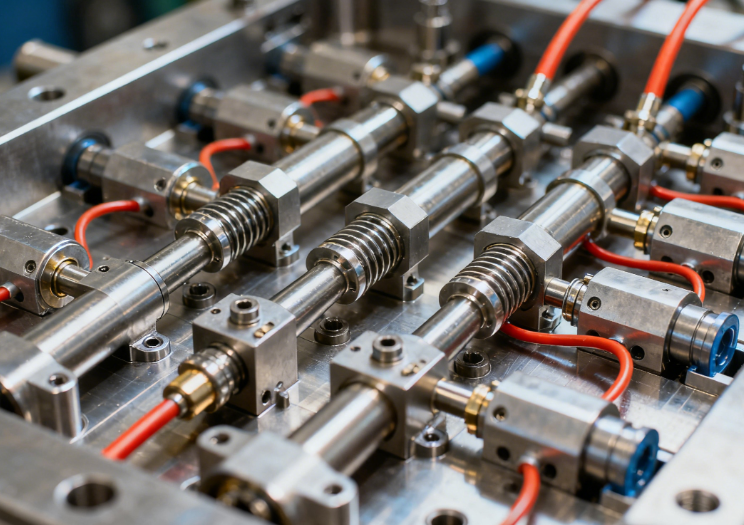
Hot Runner Selection: Open/valve-gated (valve pin response ≤0.1s, closing accuracy ±0.005mm); ±1℃ nozzle temperature control.
Mold Matching: 6-10mm main runner diameter; symmetrical branch runners; 0.02-0.03mm fitting gap to prevent leakage.
Temperature/Pressure Control: Zone heating (≤5℃ nozzle-runner temperature difference); 40-80℃ cavity temperature.
Production Optimization
Parameter Debugging: Injection pressure 70-110MPa, speed 40-90mm/s; melt temperature 5-10℃ higher than cold runner molds.
Maintenance: Regular nozzle cleaning; stepwise cooling during shutdown to avoid deformation.
Technical Trends
Intelligent temperature monitoring; energy-saving heating elements (20%-25% lower consumption); specialized systems for biodegradable/high-temperature plastics.