ABS Mold Steel Selection Guide
The selection of mold steel for ABS (Acrylonitrile Butadiene Styrene) components is critical to achieving the desired surface finish, dimensional stability, and production longevity. ABS is a thermoplastic with moderate flow characteristics and a processing temperature range of 180°C to 250°C. The following is a professional translation of the simplified guide, focusing on industry-standard terminology and practical application.
1. Key Requirements for ABS Mold Steel
ABS molding requires molds to withstand moderate injection pressures (typically 80-120 MPa) and cyclic thermal stress. The primary criteria for steel selection are:
Polishability: To achieve the desired surface texture, from standard matte to high-gloss or mirror finishes.
Wear Resistance: To prevent cavity erosion, especially when processing filled or reinforced ABS grades.
Corrosion Resistance: Essential when molding flame-retardant or modified ABS grades that may release corrosive byproducts.
Heat Treatment Stability: To maintain dimensional accuracy during the manufacturing process and over the mold's lifespan.
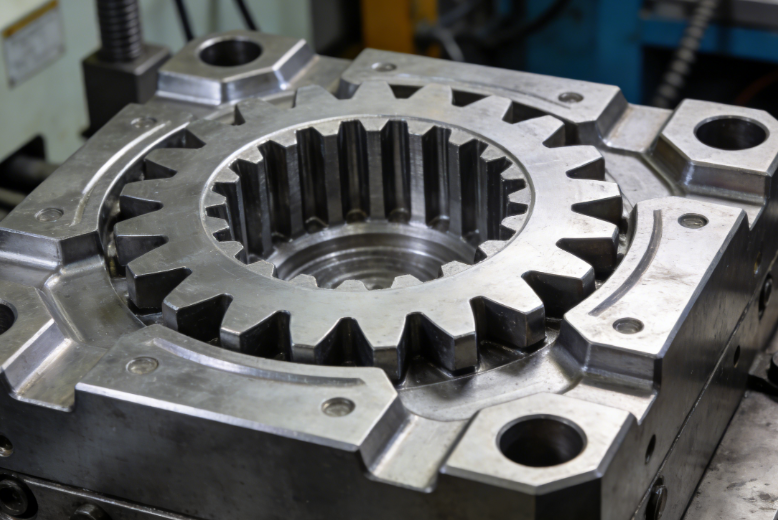
2. Steel Selection Based on Product Requirements
Standard ABS Parts (Home Appliance Housings, Daily Necessities)
Recommended Steels: P20, P20Ni
Hardness: 28–32 HRC
Polishability: Fair (Ra 1.6–3.2 μm)
Wear Resistance: Moderate
Corrosion Resistance: Fair
Typical Lifespan: 100,000 – 500,000 shots
Remarks: Cost-effective, pre-hardened (no post-heat treatment required), good machinability. Suitable for TV back covers, washing machine panels, and small appliance casings.
High-Gloss ABS Parts (Automotive Interiors, Transparent Enclosures)
Recommended Steels: 718H, NAK80
718H:
Hardness: 33–37 HRC
Polishability: Excellent (Ra ≤ 0.2 μm)
Lifespan: 500,000 – 1,000,000 shots
Remarks: High purity, excellent weldability, ideal for Class A surfaces like automotive dashboards and audio equipment housings.
NAK80:
Hardness: 38–42 HRC
Polishability: Super Mirror (Ra ≤ 0.05 μm)
Lifespan: 800,000 – 1,500,000 shots
Remarks: Exceptional dimensional stability and polishability. Suited for high-end automotive interiors and optical-grade components.
Wear-Resistant ABS Parts (Mechanical Fittings, Gears, Reinforced ABS)
Recommended Steels: H13, Cr12MoV
H13:
Hardness: 48–52 HRC
Wear Resistance: Excellent
Lifespan: 1,000,000+ shots
Remarks: Offers superior resistance to thermal fatigue and erosion from glass-filled ABS. Ideal for gears, structural parts, and high-volume production.
Cr12MoV:
Hardness: 58–62 HRC
Wear Resistance: Extreme
Remarks: High hardness but difficult to machine. Suitable for small, precision components requiring maximum wear resistance.
Corrosion-Resistant ABS Parts (Flame-Retardant, Additive-Modified ABS)
Recommended Steels: S136, 2083
S136:
Hardness: 48–52 HRC
Corrosion Resistance: Excellent
Polishability: Excellent
Lifespan: 500,000 – 1,500,000 shots
Remarks: Martensitic stainless steel. Prevents rust and staining caused by corrosive additives. Suitable for electronic components and parts used in humid environments.
2083:
Hardness: 40–44 HRC
Corrosion Resistance: Good
Remarks: A cost-effective stainless steel alternative for corrosion-prone applications where budget is a concern.