Weather Resistance Classification of Plastics
Weather resistance refers to a plastic’s ability to maintain its mechanical and appearance properties after long-term outdoor exposure to UV, temperature changes, humidity, and rain. It is critical for evaluating the service life of outdoor plastic products. Proper classification helps select suitable materials and prevent premature aging.
1. Key Standards and Testing Methods
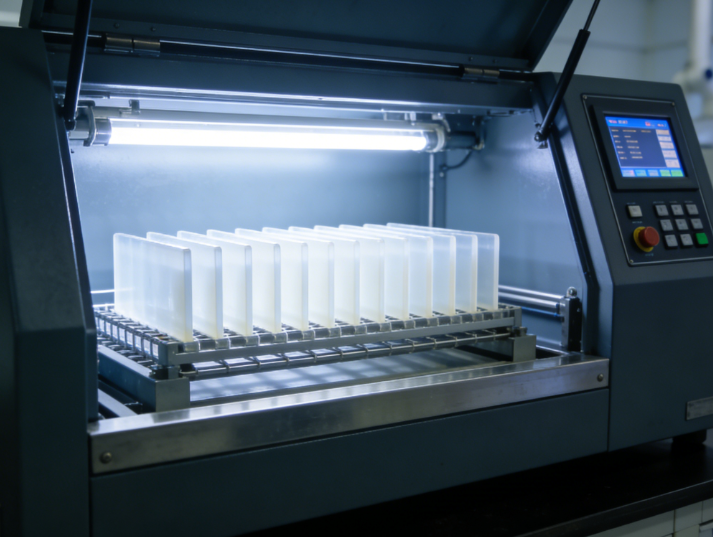
ISO 4892 is the most widely used global standard. Part 2 uses xenon arc lamps to simulate full?spectrum sunlight, while Part 3 uses fluorescent UV lamps to simulate short?wave UV degradation.
ASTM G154 and G155 are common in North America. G154 focuses on UV and condensation, and G155 specifies xenon arc conditions.
China’s GB/T 15596?2021 covers both natural and accelerated aging, and is widely used for domestic product testing.
UL 746C classifies electrical insulating plastics into f1 (suitable for long?term outdoor use) and f2 (short?term or indirect outdoor use).
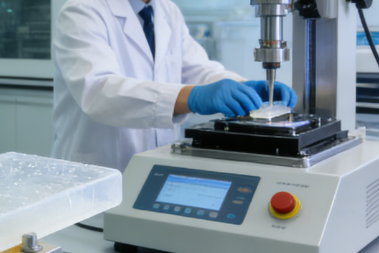
Key evaluation indicators include color difference (ΔE), gloss retention, chalking, cracking, tensile strength retention, and impact strength reduction. Transparent plastics also require tests for light transmittance and yellowness index (ΔYI).
2. Weather Resistance Classification System
The industry commonly uses a five?level system based on accelerated aging results:
| Weather Resistance Grade | Performance | Key Test Indicators | Applications |
|---|---|---|---|
| Grade 1 (Very Poor) | Severe yellowing, cracking, chalking within hours | Tensile retention < 50% at 1000h; ΔE > 8.0 | Indoor only |
| Grade 2 (Poor) | Clear degradation at 500–1000h | Tensile retention 50–70% at 1000h; ΔE 5.0–8.0 | Short-term outdoor |
| Grade 3 (Moderate) | Stable performance at 1000–2000h | Tensile retention 70–85% at 1000h; ΔE 3.0–5.0 | General outdoor |
| Grade 4 (Good) | Slow degradation at 2000–3000h | Tensile retention 85–95% at 2000h; ΔE 1.5–3.0 | Long-term outdoor |
| Grade 5 (Excellent) | Little change after 3000h+ | Tensile retention ≥ 95% at 3000h; ΔE < 1.5 | Extreme outdoor |
Some industries, such as PC sheets, have additional specialized classifications based on UV coating and structure.
3. Weather Resistance of Common Plastics
| Plastic Type | Weather Resistance Grade | UV Resistance | Outdoor Life (without UV stabilizers) | Improvement Methods |
|---|---|---|---|---|
| Fluoroplastics (PTFE, PVDF) | Grade 5 | Excellent | ≥ 20 years | None needed |
| PMMA | Grade 4 | Good | 5–10 years | Add UV absorbers |
| PC | Grade 3 | Moderate | 2–3 years | UV coating or co-extrusion |
| HDPE | Grade 3 | Moderate | 1–3 years | Add carbon black |
| PP | Grade 2 | Poor | 0.5–1 year | Add UV stabilizer packages |
| ABS / PS | Grade 1–2 | Very Poor | < 0.5 years | Indoor only; outdoor requires special modification |
4. Selection Principles and Improvement Strategies
Material selection depends on the application environment:
Indoor: Grades 1–2
Semi?outdoor: Grade 3 or higher
Long?term outdoor: Grades 4–5
Extreme environments: Grade 5 with additional additives and structural optimization
Common improvement methods include adding UV absorbers, HALS, or carbon black; applying UV coatings or co?extruded layers; and optimizing product structure (e.g., thicker walls, avoiding sharp angles).
Summary
Weather resistance classification is based on ISO, ASTM, GB/T, and other standards. The five?level system is most common. Proper material selection and targeted modification can significantly extend the service life of outdoor plastic products.