Density of PET (Polyethylene Terephthalate)
The density (specific gravity) of PET resin is an industry-recognized standard physical parameter. As a crystalline engineering plastic, it has stable base density values tested in accordance with international standards such as ASTM D792 and ISO 1183.
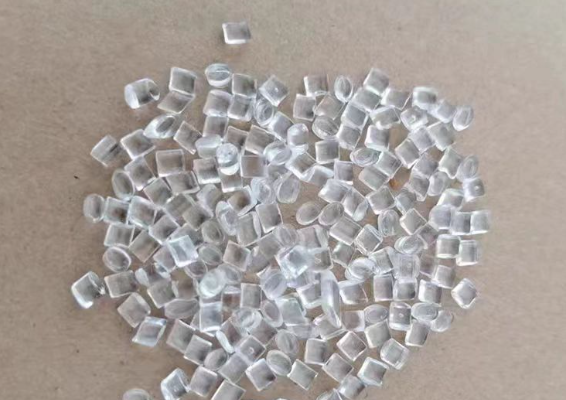
Density varies slightly across different grades and modified types of PET, with all values being industry-recognized measured data:
General-purpose injection/bottle-grade PET: 1.33~1.40 g/cm3, typical value 1.35~1.37 g/cm3, with minor fluctuations of ±0.02 g/cm3 due to crystallinity differences
Glass fiber-reinforced PET (10%~30% glass fiber): 1.40~1.65 g/cm3, with density increasing by 0.08~0.10 g/cm3 for every 10% increase in glass fiber content
Flame-retardant PET: 1.38~1.50 g/cm3, with halogen-free flame-retardant systems showing smaller density increases than halogenated systems
Inorganic-filled PET: 1.50~1.70 g/cm3, with higher filler ratios leading to greater density
This density parameter is widely used in beverage bottle production, electronic appliance housings, and automotive part injection molding. Crystallinity differences can cause minor density fluctuations, so production processes must stabilize crystallinity to ensure consistent product dimensions and weight.