Welding Process Guidelines for Plastic Mold Steels
Welding is widely used in mold manufacturing and repair to restore damaged areas, extend service life, and reduce costs. Plastic mold steels include pre-hardened, quenched-and-tempered, and stainless grades, all of which require strict control of preheating, welding parameters, and post-weld treatment to avoid cracking, deformation, and poor bonding. This guide covers the complete welding process for plastic mold steels.
Pre-Welding Preparation
Before welding, identify the mold steel type, hardness, and heat treatment condition. Remove all defects, including cracks, chips, and worn areas, and clean the surface of oil, rust, residue, and oxides.
Preheating is critical to prevent cold cracking.
Pre-hardened mold steels: 150℃ – 250℃
Hot work tool steels: 250℃ – 350℃
Stainless mold steels: 100℃ – 200℃
Heat uniformly and verify temperature with a surface thermometer.
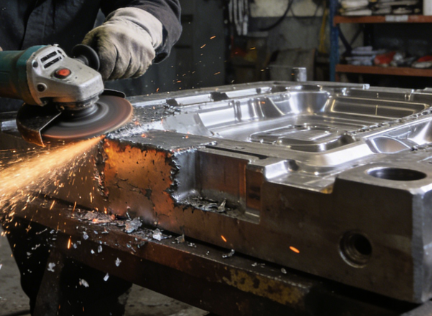
Welding Materials and Equipment
Choose welding wires with similar composition, hardness, and color to the base material. For cavity surfaces, select weld materials that allow polishing and matching finish.
TIG welding or laser welding is recommended for precision repair. Use high-purity argon (99.99%+) for shielding.
Welding Parameters and Procedure
Follow the principles: low current, short arc, fast travel, multi-pass, controlled cooling.Maintain stable arc length and proper torch angle. Use multi-pass welding with each layer 2–4mm thick. Ensure inter-pass temperature remains above preheat temperature.
Use symmetrical, segmented, or skip welding to minimize distortion.
Post-Weld Treatment and Quality Control
After welding, insulate the mold and let it cool slowly to room temperature to relieve stress. Remove slag and perform machining, grinding, and polishing as required.
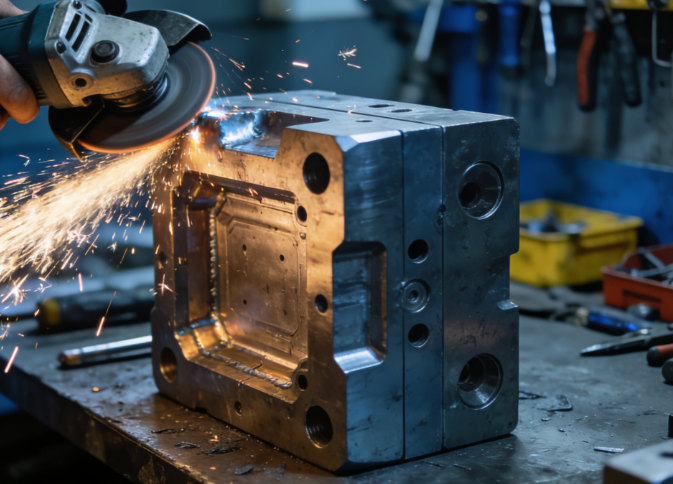
For high-hardness molds, perform stress-relief tempering at a temperature slightly lower than the original tempering temperature.
Inspect for cracks, pores, and fusion defects using visual and penetrant testing.
Safety and Operation Rules
Operators must wear protective helmets, gloves, and clothing. Ensure good ventilation and fire safety. Secure large molds to prevent tipping.
Conclusion
Mold steel welding requires careful preparation, appropriate materials, precise parameters, and proper post-treatment. Standardized welding procedures ensure high bonding strength, minimal distortion, and restored mold performance, significantly extending mold service life and reducing production costs.